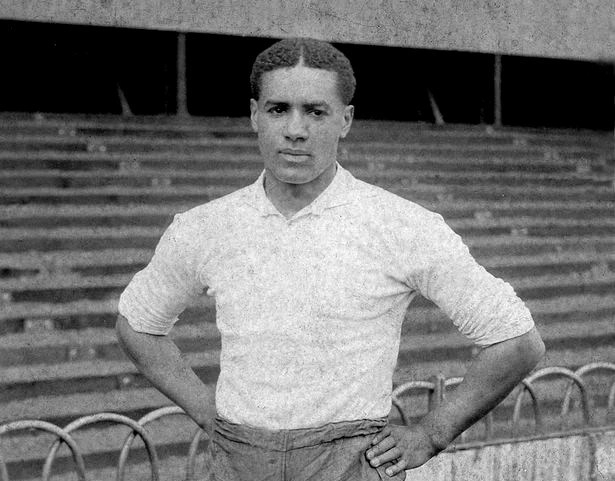
Walter Tull is one of the nation’s black historical legends who spent a significant amount of his life in Northampton. Here are a few facts you might not know about him:
1.
He was one of six children and a twin. Altogether, the Tull siblings were three brothers and three sisters, including Bertha, William, Walter, Edward, Elsie and Cecilia. Later came Miriam who was born to his father’s second wife, Clara – his mother’s cousin.
2.
His grandparents were slaves. William Tull and Anna Lashley, the parents of Walter Tull’s father, Daniel, were slaves in Barbados.
3.
He wanted to be a printer. After leaving school at 14, Walter pursued an apprenticeship in printing, and was hoping for a job at a newspaper printing company.
4.
He moved to Northampton after suffering torrents of racist abuse at Tottenham. Whilst playing for Tottenham F.C., Walter received a lot of negative attention to the point where tens of thousands of fans were hurling racist epithets and comments at him. The club benched him rather than deal with what they deemed as negative publicity for the team.
5.
He played for Northampton Town over 100 times. After moving to Northampton, the racism did not lessen, but that did not stop Walter from excelling in his football career either. He played for the club for three years and became a well-established member of the team.
6.
He was put forward for officer training, becoming the first ever black officer in the British army. In 1917, after receiving recognition for his gallant fighting from the start of the Great War, Walter Tull broke the regulation that prevented ‘non-Europeans’ from becoming an officer.
7.
He suffered from shell-shock. After the bloody onslaught in the Battle of the Somme, Walter suffered from shell-shock, which is now recognised as post-traumatic stress disorder, and was sent home. He later returned after becoming an officer in 1917.
8.
Though the ministry of defence denies this, researcher, Phil Vasili believes he was recommended for a military cross. However, due to contemporary social norms and restrictions he was not honoured with one.
9.
He was going to join the Glasgow Rangers. After the war, Walter had agreed to join one of the biggest teams in Scotland. However, he died in combat before this could happen.
10.
No one knows where his remains are. After courageously leading his troops against the German bombardment in March 1918, Walter Tull was shot and killed. Though his troops tried to recover his body, heavy gunfire prevented them from doing so. He is now commemorated on a memorial wall located in the Faubourg d’Amiens cemetery to remember soldiers whose bodies were never recovered or are buried in unmarked graves.
If that interested you, be sure to read the feature for more details on Walter Tull, coming out this May!


 The Northamptonian